 Isaac Bythewood
I let an AI port this blog from Django to Flask and the app itself came out fine. It's a single app.py with markdown rendered through Mistune, a few hundred lines in total, and the whole rewrite took an afternoon. About a week later I noticed a pile of 404s in my analytics.
The Django version served posts at /posts/<slug>/ and the Flask version served them at /blog/<slug>/. I never asked for that and it wasn't mentioned anywhere, it just came out that way, probably because the route handler was called blog_post or because plenty of Flask blogs in the training data namespace their routes under /blog/. Either way every URL on the site changed and I didn't catch it on review because I was reading code instead of clicking links.
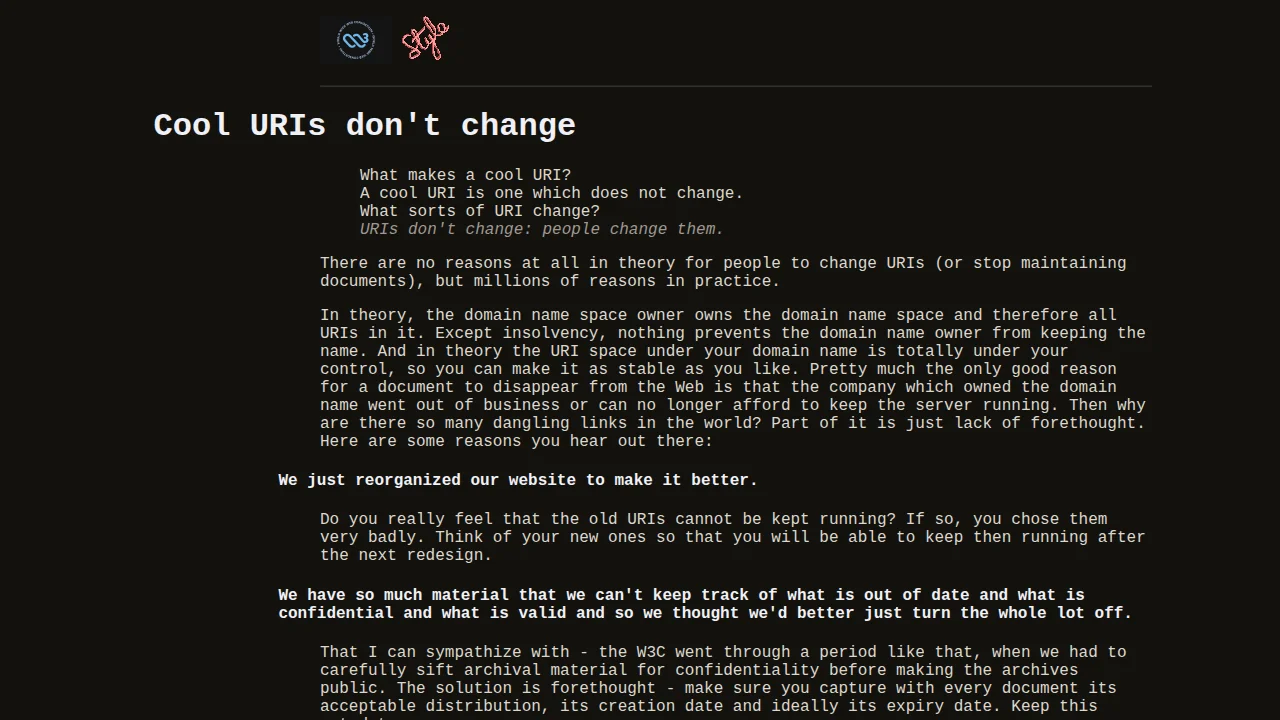
Tim Berners-Lee wrote Cool URIs don't change back in 1998 and it's still worth a read. Any URL you've published to Hacker News, to search engines, or in your own RSS feed is a promise to everyone who linked it, and breaking that because a route function got renamed isn't great.
Fixing it took about five minutes once I knew. I moved the post routes back to /posts/<slug>/ and 301'd the old /blog/<slug>/ URLs, but that's still a week of broken inbound links and however many people hit a 404 and left.
What I took from this is that an AI is good at rewriting code and much worse at remembering the code is part of a system with users, search indexes, and years of links pointing into it. So if you're asking for a port, ask for URL parity up front and diff the route table afterwards. I'd treat URLs as part of the public API from now on because that's basically what they are.